
On Pinterest, Instagram, or YouTube, there are countless inspiring DIY natural cosmetics recipes and tips. Surveys have shown that up to 1/4 of the people who try DIY natural cosmetics recipes online suffer a skin reaction. It's similar with skincare tips. I'll show you here what you need to pay attention to in order to make safe natural cosmetics.
Citric acid against wrinkles, lime and baking soda as a deodorant, vitamin E in hot oil, activated charcoal for everything, zinc ointment for babies, or essential oils in huge quantities. A wealth of information, a wealth of contradictions, and a lot of false information, for which I already feel sorry for the skin of those who try these recipes at home. Ayaaaa!

How to make safe natural cosmetics
To make sure that your skincare is safe, I have put together a few points that are essential for me personally:
- Keep it simple, less can be more
- Better safe than sorry* – if you don't know your way around yet or also follow the philosophy of waterless natural cosmetics and love it like we do, then formulations that do without water are recommended. This eliminates the risk of dangerous microbial contamination plus the formulations also bring various benefits for your skin and the environment.
- Know the raw materials, their origin and quality. I recommend raw materials in Demeter or organic quality, unrefined and cold-pressed. Research them properly and/or get additional advice in a drugstore, a natural cosmetics studio, or similar. Store the raw materials correctly, oils and shea butter cool and dark.
- Make sure that you inform yourself from trustworthy sources (check the authors and their knowledge as well as any online reviews). Especially online this is very important, as a lot of nonsense is going on. Offline there are great books on the topic.
- Follow our 6 most important basic rules for making your DIY natural cosmetics.
- Be careful with essential oils. Use them with great caution. Yes, I say it again and again!
- Stay away from DIY sunscreen.
If you follow these points, you can let your creativity run wild and make beautiful, safe natural cosmetics. Whether for your own use or as a gift, spread the word, to inspire more and more people for a healthy, holistic skincare.
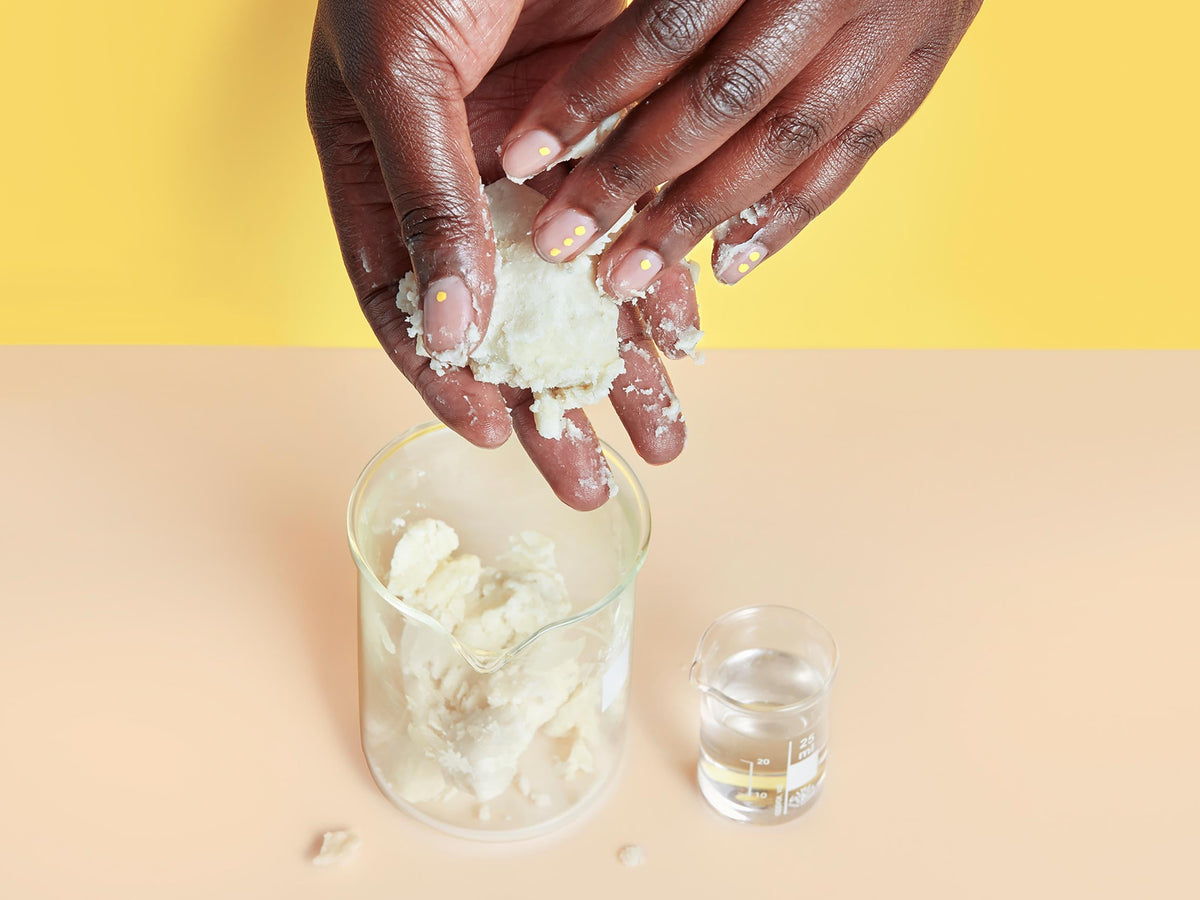
-> Here you will find the 750g organic shea butter
Tip
I strongly recommend doing a small "compatibility test" on the sensitive inside of the forearm before the first application with a product.

The sensitive inside of the forearm is particularly recommended for a compatibility test. To do this, apply a little of the product or raw material and wait up to 24h to see if there is a reaction.
Have fun making your own natural cosmetics. If you have questions, you can simply leave a comment here! And don't forget to follow us on Instagram for more DIY tips and tricks.
All the best,
Sandra, Natural cosmetics expert & Founder of SHEA YEAH

*For pregnant women, children, people with a tendency to allergies or a weakened immune system, this is highly recommended anyway.